
A personal productivity rhythm is the recurring pattern of cognitive peaks and troughs in your energy and focus throughout the day, which you can align your tasks with to work faster, think more clearly, and feel less drained. This concept is grounded in two biological cycles: ultradian rhythms, which repeat roughly every 90–120 minutes, and circadian rhythms, which govern your daily energy arc from morning to night. Most people have 2–4 hours of peak cognitive capacity each day. Knowing when those hours fall, and protecting them, is the foundation of every effective personal time management technique.
What is a personal productivity rhythm, and why does biology drive it?
Your brain does not operate at a flat, constant level of performance. It cycles through periods of high focus and low focus all day long, driven by two overlapping biological systems.
Ultradian rhythms repeat roughly every 90–120 minutes, alternating between a high-focus phase and a recovery phase. When you ignore the recovery phase and push through, your output degrades. When you honor it with a 15–20 minute break, your next focus window opens stronger.
Circadian rhythms operate on a 24-hour cycle. They create a daily arc of energy that typically peaks in the late morning for most people, dips after lunch, and partially recovers in the late afternoon. The exact timing varies by individual chronotype, which is your biological preference for morning or evening activity.
Deep work performed during a circadian trough takes about 50% longer than the same task completed during a peak window. That single fact reframes how you should think about scheduling. Doing your hardest thinking during the wrong hour is not discipline. It is inefficiency.
The practical implication is direct: your productivity rhythm is not a motivational concept. It is a biological fact you can either work with or fight against.
How to identify your own energy and focus patterns
Identifying your rhythm requires observation before intervention. You cannot build a schedule around patterns you have not yet mapped.
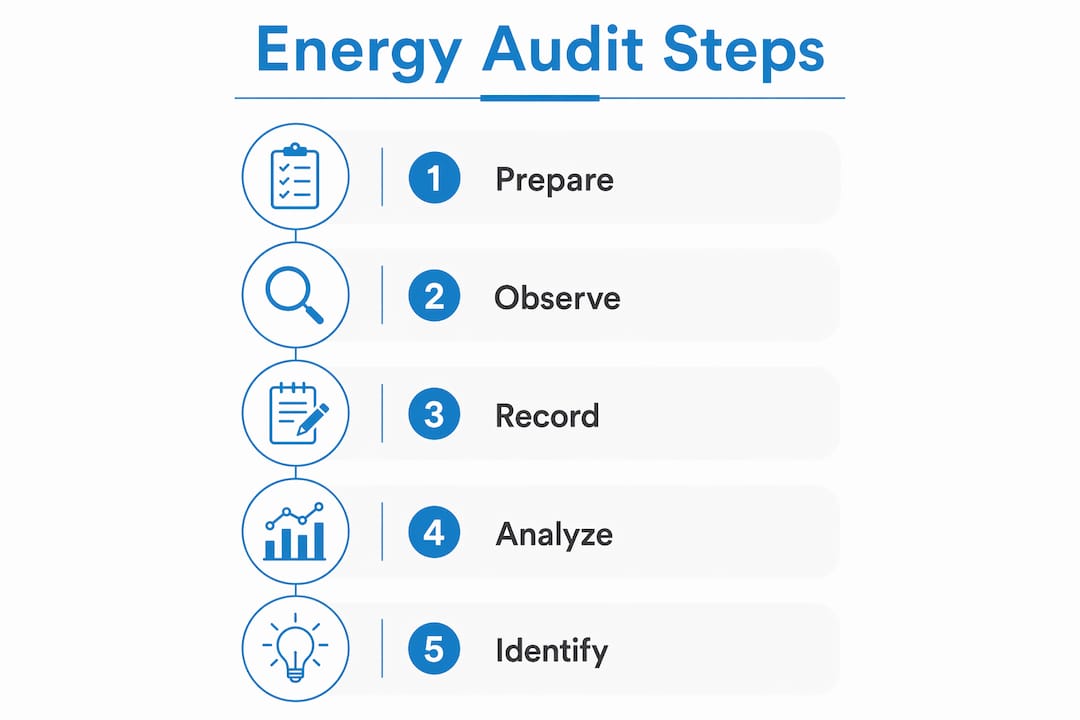
- Run a three-day energy audit. Every 90 minutes for three days, pause and rate your mental clarity and motivation on a scale of 1–10. Note the time, your rating, and what you were doing. Three days gives you enough data to see a pattern without turning the exercise into a burden.
- Track task completion quality, not just speed. Note which tasks felt effortless and which felt like pushing through mud. Effortless output usually signals a peak window. Grinding usually signals a trough.
- Log your natural rest signals. Yawning, losing your place in a document, and checking your phone without reason are all signs your ultradian cycle is calling for recovery. Record when these happen consistently.
- Identify your chronotype. Morning types typically hit their first cognitive peak between 8:00 AM and 11:00 AM. Evening types often peak later, between 10:00 AM and 1:00 PM or even into the afternoon. Neither is superior. Both are real.
- Review your log at the end of day three. Look for two or three recurring high-energy windows. Those are your prime slots for deep work.
Pro Tip: Do your energy audit during a normal week, not a vacation week or a week with unusual deadlines. Atypical stress or rest will distort the data and give you a false baseline.
The goal of this process is a simple map: two or three daily windows where your brain performs best, and the natural rest points between them. That map becomes the skeleton of your productivity schedule.
Pomodoro, ultradian cycles, and the 52/17 method: which timing model fits you?
Three timing models dominate the conversation around optimal work patterns for productivity. Each has a different underlying logic, and none is universally superior.

The Pomodoro Technique uses 25-minute focused work intervals followed by 5-minute breaks, with a longer break every four cycles. It works well for people who struggle to start tasks or who face frequent interruptions. The short intervals lower the psychological barrier to beginning. The limitation is that 25 minutes is too short for most deep cognitive work, which typically requires 45–90 minutes to reach full flow.
Research points to a different ratio as more effective for sustained output: 52 minutes of focused work followed by 17 minutes of genuine rest. This ratio aligns more closely with the natural ultradian cycle and allows enough time to reach depth on complex problems before the recovery window opens.
| Method | Work duration | Rest duration | Best for |
|---|---|---|---|
| Pomodoro | 25 minutes | 5 minutes | Task initiation, fragmented environments |
| 52/17 method | 52 minutes | 17 minutes | Sustained deep work, creative output |
| Ultradian block | 90–120 minutes | 15–20 minutes | Long-form projects, complex analysis |
The ultradian block model is the most biologically aligned. It matches the full focus-to-recovery arc of the brain's natural cycle. The trade-off is that it requires a relatively interruption-free environment, which is not always realistic.
The right choice depends on your work context. A parent working during nap times may find the Pomodoro model more practical. A developer with a protected morning block may thrive on full ultradian cycles. The method is a tool, not a doctrine.
How to build a personalized productivity schedule that actually holds
Effective scheduling assigns specific time blocks according to your priorities and energy levels, rather than reacting to whatever appears first in your inbox. The process below turns your energy audit into a working daily template.
- Place your deepest work in your first peak window. This is the most protected slot of your day. Writing, coding, strategic thinking, and any task requiring sustained concentration belong here. Guard it from meetings and low-value requests.
- Schedule administrative tasks in your trough. Email, scheduling, expense reports, and routine decisions require less cognitive load. Your post-lunch dip is the right time for them, not your morning peak.
- Batch meetings into a single block. Context switching between meetings and deep work is expensive. Group meetings in one slot, ideally at the boundary between a peak and a trough, so you lose the least productive time.
- Build your rest periods into the schedule explicitly. A break that is not scheduled gets skipped. Treat your 15–20 minute recovery windows as fixed appointments.
- Conduct a weekly review every Friday or Sunday. Ask what worked, what did not, and what needs to shift. A flexible rhythm that adapts based on weekly feedback outperforms any rigid system over the long run.
Pro Tip: Rest periods work best when they involve a cognitive mode switch, such as taking a walk, doing light stretching, or making a cup of coffee. Switching from one screen task to another screen task does not produce genuine recovery.
Effective scheduling can increase daily output by 20–30% compared to reactive task management. That gain does not come from working more hours. It comes from doing the right work at the right time.
Common misconceptions about productivity rhythms
Several beliefs about productivity rhythms cause people to abandon them before they see results.
- "My rhythm must be perfectly consistent every day." Rhythms are biological tendencies, not mechanical clocks. Sleep quality, stress, illness, and social demands all shift your energy arc. A default template is a starting point, not a contract.
- "More focused hours means better output." Most people overestimate their sustainable deep work capacity. Starting with 2–4 hours of genuine deep work per day is realistic and sufficient for most professionals. Pushing beyond that without adequate recovery accelerates burnout, not progress.
- "If I miss my peak window, the day is wasted." Missing one window does not erase the day. Shift your deep work to the next available window and treat the missed slot as data, not failure.
- "Productivity rhythms are only for people with flexible schedules." Even within a fixed 9-to-5 structure, you can protect your best cognitive window for your hardest task and move low-value work to your natural trough.
The machine-logic approach to constant, uninterrupted work is a primary driver of exhaustion. Sustainable productivity requires alternating effort and rest in natural cycles, not eliminating rest to squeeze out more hours.
Key takeaways
A personal productivity rhythm built around ultradian and circadian cycles is the most direct path to higher output with less mental fatigue.
| Point | Details |
|---|---|
| Biology sets the baseline | Ultradian cycles repeat every 90–120 minutes; ignoring them degrades output quality. |
| Peak windows are limited | Most people have only 2–4 hours of peak cognitive capacity per day; protect them for deep work. |
| Timing method matters | The 52/17 work-rest ratio outperforms the classic Pomodoro for sustained, complex tasks. |
| Rest must be real | Cognitive mode switches, like walking, produce genuine recovery; screen-to-screen task shifts do not. |
| Flexibility beats rigidity | Weekly reviews and adaptive scheduling outperform fixed routines over the long run. |
The uncomfortable truth about "working harder"
I spent years treating exhaustion as a sign of commitment. If I was tired, it meant I was working hard enough. If I had energy left at the end of the day, I assumed I had not pushed hard enough. That logic is wrong, and I know exactly when I stopped believing it.
The shift came when I started tracking not just what I completed, but when I completed it. The pattern was impossible to ignore. My best work, the writing that held together, the decisions I did not regret, the problems I actually solved, all of it happened in a narrow window between roughly 8:30 AM and 11:00 AM. Everything after lunch was slower, shallower, and required more revision.
The return to natural work-rest rhythms is not a productivity hack. It is a correction. Modern work culture inherited its assumptions from industrial manufacturing, where more hours on the line meant more output. Knowledge work does not operate that way. A tired brain does not produce 80% of a rested brain's output. It produces something closer to 40%, and it makes more errors doing it.
The most useful reframe I have found: your rhythm is not a constraint on your ambition. It is the mechanism through which your ambition gets executed. Work with it, and you get more done in fewer hours. Fight it, and you get less done while feeling worse.
— Rndom
Planning your week around your rhythm with Qweekly
Building a rhythm-based schedule is straightforward in theory. Keeping it intact across a real week, with its interruptions, shifting priorities, and unexpected demands, is where most people struggle.

Qweekly is a weekly planner built specifically for that gap. It gives you a clean visual layout of your week, a quick-capture inbox for tasks that arrive at inconvenient moments, and a drag-and-drop system for moving work when your rhythm shifts. Its built-in 70% rule prevents you from overloading any single day, which is the planning equivalent of respecting your ultradian recovery window. You can start planning your week without configuration, cloud setup, or a learning curve. For more on focus management and work-rest balance, the Qweekly writing section covers practical techniques for people building real projects alongside real lives.
FAQ
What is a personal productivity rhythm?
A personal productivity rhythm is the recurring daily pattern of cognitive peaks and troughs in your energy and focus. Aligning your tasks with these peaks, rather than working against them, improves both output quality and mental endurance.
How many peak focus hours does the average person have per day?
Most people have 2–4 hours of peak cognitive capacity per day. Scheduling your most demanding work inside those windows, rather than spreading it across the full day, produces better results in less time.
What is the difference between ultradian and circadian rhythms?
Ultradian rhythms cycle every 90–120 minutes within a single day, alternating between focus and recovery. Circadian rhythms operate on a full 24-hour arc, creating a broader daily pattern of high-energy and low-energy periods.
How do I find my personal productivity peak times?
Run a three-day energy audit by rating your mental clarity every 90 minutes and noting the time. After three days, the recurring high-energy windows become clear and form the basis of your personal schedule.
Is the Pomodoro Technique or the 52/17 method better for deep work?
The 52/17 work-rest ratio is better suited to deep, complex work because it allows enough time to reach genuine focus depth. The Pomodoro Technique works better for task initiation or environments with frequent interruptions.